Holiday Reservation Playbook: Thanksgiving Through New Year
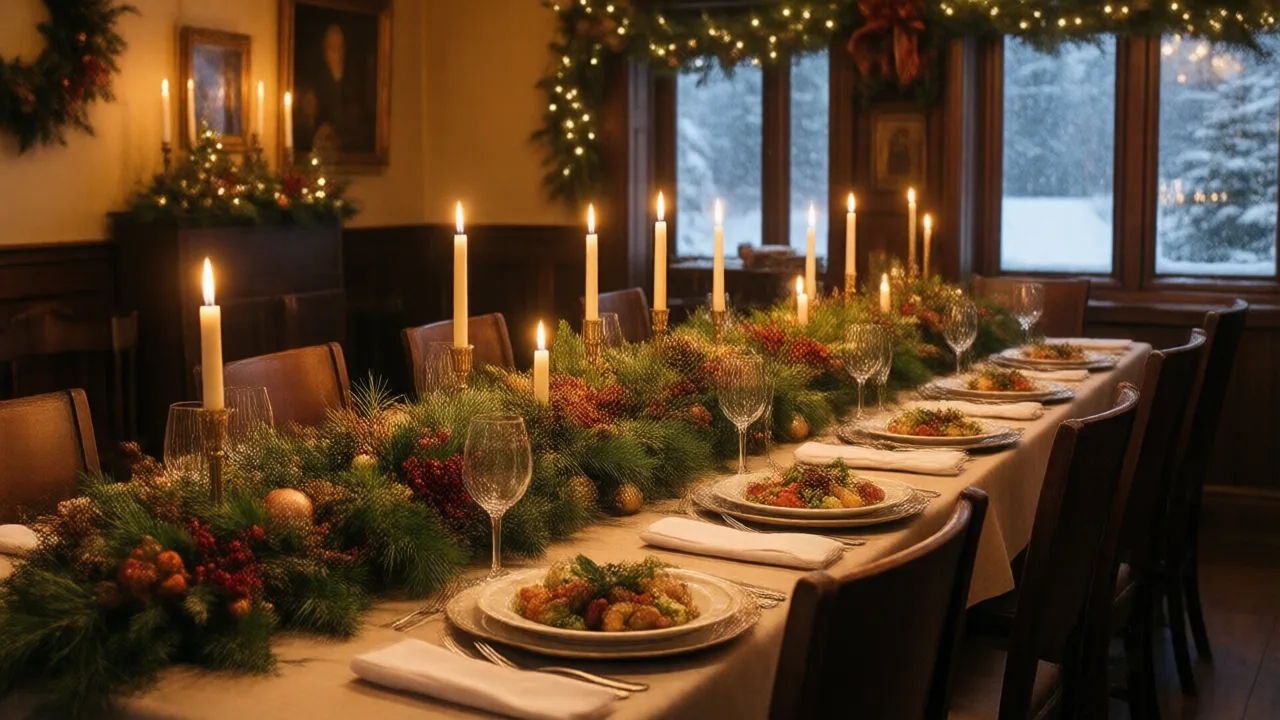
Between the fourth Thursday of November and the first day of January sits about six weeks that will produce somewhere between 18% and 25% of a full-service restaurant's annual revenue. Four of those dates — Thanksgiving, Christmas Eve, Christmas Day, New Year's Eve — routinely run at two to three times a normal Saturday.
And most restaurants start preparing for them in November.
That timing gap is where the money goes. The corporate party planner booked her December 12th dinner in early October and found you unavailable because your holiday menu was not finalised. The family of fourteen who books Christmas Eve every year went elsewhere because your booking window did not open until November 3rd. The New Year's Eve seating that should have sold at $125 a head sold at $95 because it went on sale three weeks out and had to be discounted to fill.
None of those are service failures. They are calendar failures. What follows is the schedule that fixes them, working backwards from the dates themselves.
The Booking Windows That Matter
Different holiday occasions have completely different lead times, driven by who is doing the booking and how far ahead that person plans. Treating them as one season is the root of most holiday mistakes.
| Occasion | Open bookings | Peak booking week | Typical party size |
|---|---|---|---|
| Corporate holiday parties | Early September (12+ weeks) | Late September | 18–45 |
| New Year's Eve | Mid October (10 weeks) | Late November | 2–6 |
| Christmas Eve / Christmas Day | Late September (9 weeks) | Early November | 6–14 |
| Thanksgiving | Late September (8 weeks) | First week of November | 4–12 |
| Friendsgiving / pre-holiday groups | Early October | Late October | 8–20 |
| New Year's Day brunch | Early December | Week of December 26 | 2–6 |
The pattern to notice: the biggest, highest-value bookings come earliest. Corporate groups and large family parties are decided by committees and family group chats weeks before an individual couple thinks about New Year's Eve. If your book is not open when those decisions are being made, you do not lose a marginal cover — you lose the 30-cover booking that would have anchored the night. That is why a deliberate Christmas and holiday trading strategy starts with dates on a calendar rather than a menu.
Working Backwards: The Week-by-Week Schedule
Early September — 12 weeks out
- Lock the operating calendar. Every date from Thanksgiving to January 1: open, closed, or private-events-only. Publish it.
- Draft holiday menus and pricing. They do not need to be final, but they need to be quotable, because corporate enquiries start now and "we have not decided yet" loses the booking.
- Set deposit rules by party size and write them into the booking terms.
- Open corporate and private event enquiries. One person owns the inbox with a 24-hour response commitment.
Late September — 8 to 9 weeks out
- Open Thanksgiving, Christmas Eve, and Christmas Day bookings publicly.
- Email and text your guest list before anything goes public. Last year's holiday guests get first access — it fills the best slots with people who already like you.
- Update your Google Business Profile with special hours for every affected date. This is 20 minutes of work that prevents hundreds of phone calls.
- Set your seating pacing rules and blocked-out slots in the reservation system, not in someone's head.
Mid October — 10 weeks to New Year's Eve
- Open New Year's Eve, ticketed and prepaid.
- Publish the holiday menus in final form, on your own site first.
- Confirm supplier commitments for the four peak dates. Turkey, prime rib, shellfish, and sparkling wine all get allocated early, and being late means paying spot prices in December.
- Open Friendsgiving and pre-holiday group bookings.
Early November — 3 weeks to Thanksgiving
- Publish the complete staff schedule for the entire season. Every date through January 1. This is the deadline that matters most and the one most often missed.
- Send the first confirmation wave to every holiday booking: date, time, party size, menu, deposit status, cancellation terms.
- Run a pacing review. Look at every peak date and find the 15-minute windows that are over-loaded, then move bookings before the guests are attached to a time.
- Confirm every large party by phone, not email. Parties of ten or more get a human call.
Mid to late November — game week
- Final headcount confirmations for Thanksgiving, 72 hours out, with a stated deadline after which the count is locked for billing.
- Brief the whole team on the plan: seating map, pacing, menu, allergen protocol, and who makes decisions when something goes wrong.
- Release any unconfirmed, undeposited bookings and offer them to the waitlist.
December — the long middle
- Corporate party execution runs from roughly December 4 to December 20. Treat each as an event with an owner, not a large reservation.
- Watch the second week of December closely: it is usually the highest-volume week of the entire year in aggregate covers, even though no single date is famous.
- Send New Year's Eve pre-arrival details a week ahead: arrival window, menu, dress, timing of any countdown moment, parking.
Deposits: Lower Your Threshold for the Season
Holiday no-shows are less frequent than off-season no-shows — the occasion itself is a commitment device — but each one costs dramatically more. A four-top that vanishes on a normal Tuesday costs you a resellable table. A twelve-top that vanishes on Christmas Eve costs you 12 covers at holiday pricing, prep that was committed three days earlier, and a section that cannot be refilled at 7:00 PM on the busiest night of the quarter.
The threshold structure that works:
| Party size | Requirement | Cancellation window |
|---|---|---|
| 2–5 | Card on file | 24 hours |
| 6–9 | $20–35 per person deposit | 72 hours |
| 10–19 | 50% prepayment | 7 days |
| 20+ | Full prepayment, signed terms | 14 days |
| New Year's Eve, any size | Full prepayment, ticketed | Non-refundable, transferable |
Two implementation notes. State the terms at the point of booking, in the booking flow — not in a follow-up email that goes unread. And confirm them a second time in writing when you take the deposit, including the exact date and time after which money is not returned. Almost every deposit dispute traces back to terms that were technically disclosed but never actually communicated. If you do not already have a general framework for holds and forfeits, the season is a good reason to build a proper deposit and prepayment policy that then serves you year-round.
Prix Fixe: Fewer Choices, Better Nights
For the four peak dates, a fixed or tightly limited menu is close to non-negotiable. The reasons are operational rather than culinary:
- Purchasing becomes predictable. You know exactly how many portions of each dish to buy against a confirmed cover count. Waste on holiday prix fixe routinely runs under 3%.
- A smaller brigade can execute. Six dishes done 200 times is a fundamentally easier kitchen problem than forty dishes done five times, and you will be short-staffed.
- Turn times hold. Fixed menus cut ordering time, kitchen ticket complexity, and course gaps. That protects your second and third seatings.
- Average spend rises. A well-built holiday prix fixe typically lifts spend per head 15% to 30% over a la carte, because the price is set at the occasion rather than at the individual appetite.
Build it genuinely limited: three starters, four mains, three desserts. Include one vegetarian and one gluten-free option that are real dishes rather than modifications. Price per person, publish the price everywhere the booking is visible, and state clearly whether beverages, tax, and service are included — the single largest source of holiday complaints is a guest who expected the advertised number to be the final number.
Pacing: The Configuration Change Worth the Most
Here is the mistake that quietly ruins holiday service. Every reservation gets booked on the hour or half hour, because those are the times guests ask for. At 6:00 PM the kitchen receives 40 covers of tickets simultaneously. Course gaps blow out, the 8:00 PM seating starts 25 minutes late, and by 9:30 the entire night is running an hour behind on the highest-revenue evening of the year.
Stagger at 15-minute intervals and cap each interval at roughly 12% to 15% of dining room capacity. For a 100-seat room:
- 5:00 PM — 14 covers
- 5:15 PM — 12 covers
- 5:30 PM — 15 covers
- 5:45 PM — 12 covers
- 6:00 PM — 14 covers
Same 67 covers in the first hour, arriving as a steady flow rather than three waves. Kitchen output stays even, course gaps stay inside target, and the later seatings start on time. This costs nothing, takes an afternoon to configure, and is the single highest-return change available for holiday service. The same principle governs any high-demand night, and the mechanics of peak-period pacing carry straight over to Valentine's Day, Mother's Day, and local event nights — and into the wider seasonal booking calendar that runs the rest of your year.
Two additional pacing rules for the season. Large parties get the earliest or latest slots, never the middle of the peak, because a fourteen-top landing at 7:15 PM absorbs the kitchen for twenty minutes. And build a hard 30-minute gap between the last first-seating arrival and the first second-seating arrival, so a late-running table does not cascade.
Example scenario: A 120-Seat Restaurant That Moved Its Calendar Forward Six Weeks
Illustrative scenario — a composite example built to show how the numbers work. It does not describe a real business or customer.
A 120-seat American restaurant in Chicago had run the same holiday pattern for years: menus finalised in early November, bookings opened November 1, staff schedule published November 20, New Year's Eve released December 5. Revenue for the six-week season sat around $412,000, with New Year's Eve consistently underselling and requiring a late discount to fill. They moved the entire calendar forward: corporate enquiries from September 2, Thanksgiving and Christmas bookings from September 26, New Year's Eve ticketed and on sale October 14, staff schedule published November 4. They also introduced 15-minute staggered pacing and dropped the deposit threshold from parties of ten to parties of six. The following season produced $537,000 across the same six weeks — a 30% increase with no additional seats and no price increase on the core menus. New Year's Eve sold out on November 22 at full price. The largest single contributor was corporate bookings, which more than doubled because the restaurant could quote firm menus and prices in the week those decisions were being made.
Staffing: The November 1 Deadline
Publish the complete holiday schedule by the first week of November. Not the week of Thanksgiving. Not "as soon as we know."
Your team makes their own holiday plans in October. A schedule published on November 20 guarantees a wave of conflicts on your four most important dates, and every one of those conflicts becomes a negotiation you conduct from a position of weakness. Publishing early converts the same conversation into a manageable one held six weeks out.
Three things to get right alongside the schedule. Agree holiday pay rates in writing before the schedule goes out, so nobody discovers the rate on their payslip. Build a 15% overstaffing buffer into the four peak dates — the cost of one extra server is trivially small against the cost of a service that falls apart. And confirm attendance individually, in writing, from each person; silence is not agreement, and the person who never replied is the person who does not show up on Christmas Eve.
The Communication Schedule
Holiday guests need more information than ordinary guests, because more of them are visiting for the first time, travelling, or coordinating a group. A fixed communication sequence prevents almost all of the day-of confusion:
- At booking: confirmation with date, time, party size, menu, price per person, deposit terms, cancellation deadline.
- Two weeks out: the menu again, plus parking, dress, arrival window, and how to change the party count.
- 72 hours out: final headcount confirmation for parties of six or more, with a stated deadline.
- Day before: a short reminder with the arrival time and a direct number to text.
- Day of, for large parties: a brief call in the morning confirming the count and any last changes.
Every message needs a monitored reply channel. Holiday guests text about counts, allergies, late arrivals, and wheelchair access, and the restaurant that answers within ten minutes on December 23 earns a booking for the following year.
After January 1
Do the review in the first week of January, while it is still specific. Covers and revenue by date against last year, average spend by date, no-show and cancellation rates on deposited versus undeposited bookings, which 15-minute windows ran hot, which menu items sold and which did not, and every complaint logged with its root cause.
Then write next year's calendar immediately, with the dates already on it. A holiday calendar built in January is worth more than one assembled in September, because everything you learned is still in the room. The restaurants that compound their holiday performance year over year are not the ones with better food in December. They are the ones whose September looks like a plan instead of a scramble.
Run the Holiday Season From One Book
KwickBook handles holiday-specific menus and pricing, deposit rules by party size, staggered seating pacing, and automated confirmation sequences inside KwickOS — so the busiest six weeks of your year run on rules you set in September instead of decisions made at the host stand in December.
Set Up Holiday Bookings in KwickOS →