Private Dining Booking: The Restaurant Manager's Guide
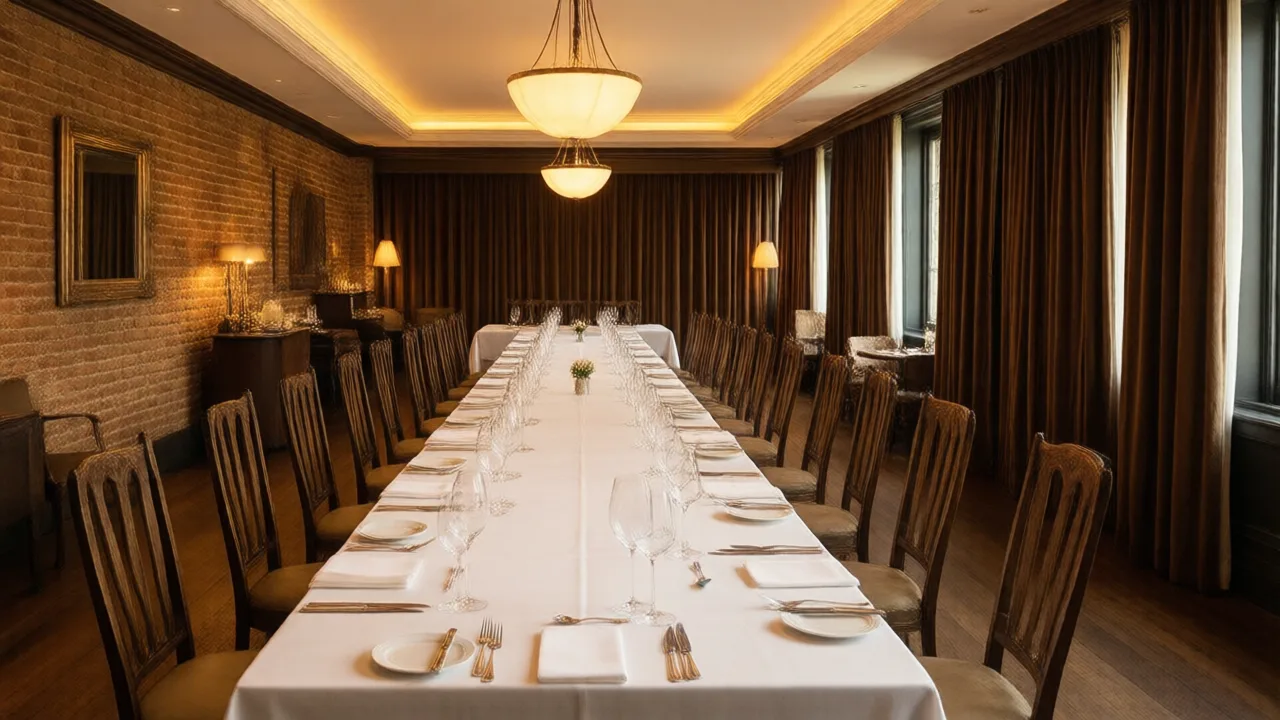
Private dining is one of the most profitable segments a restaurant can develop. A single private room booking for 20 guests on a Tuesday — historically the slowest night of the week — can generate more revenue than 60 regular covers. Yet most restaurants leave this opportunity half-developed, relying on word-of-mouth and an outdated PDF menu sent via email.
This guide walks through every stage of a modern private dining operation: attracting inquiries, qualifying guests, building compelling packages, protecting the business with solid contracts, and executing flawlessly on the night. Whether you have a dedicated private dining room or a semi-private section that can be curtained off, the principles apply.
Why Private Dining Deserves Its Own System
Private dining is not simply a larger reservation — it is a fundamentally different product with different economics, different guest expectations, and different operational requirements. Treating it as an oversized booking will lead to disappointed clients and missed revenue.
Key differences from regular reservations:
- Lead time is longer (weeks to months, not days)
- The inquiry-to-booking journey involves multiple communications
- Customization is expected — menus, AV, decorations, timing
- Financial stakes are higher, requiring formal contracts
- A single cancellation without protection can wipe out a week of profit
The solution is a dedicated private dining system: a separate booking flow, dedicated contact, standardized packages, and contract templates that can be generated in minutes.
Building Your Private Dining Package Tiers
Guests who inquire about private dining want to make a decision quickly. Presenting a menu of clearly priced options is far more effective than bespoke quotes that require internal approval and delay response time.
Three-Tier Package Structure
| Package | Inclusions | Minimum Spend | Best For |
|---|---|---|---|
| Classic | Set 3-course menu, house wine, water | $65/person | Team dinners, small celebrations |
| Signature | 5-course menu, wine pairing, aperitif | $110/person | Corporate, milestone birthdays |
| Prestige | Chef's tasting, sommelier pairing, champagne arrival, personalized menu cards | $175/person | Weddings, anniversaries, VIP entertainment |
Each package should specify what is and is not included: AV equipment (projector, screen, microphone), room decoration policy (what guests can bring), preferred suppliers for flowers and cakes, and parking arrangements. The fewer surprises on the night, the better for everyone.
The Inquiry Response Workflow
Speed is the single most important factor in converting private dining inquiries. Research across event booking platforms shows that responding within one hour of an inquiry converts at 3x the rate of responding within 24 hours. Same-day responses that arrive the next morning convert at roughly the same rate as next-day responses.
Step-by-Step Inquiry Process
- Inquiry received — via website form, phone, or email. Log it immediately in your reservations system with date, party size, occasion, and preferred dates.
- Acknowledge within 30 minutes — a brief reply confirms you received the inquiry, tells the client when to expect a full response, and conveys enthusiasm. This alone differentiates you from 80% of competitors.
- Full proposal within 4 hours — send your package PDF, availability for their preferred dates, and a tentative hold request.
- Tentative hold — offer to hold the date for 48-72 hours while they confirm internally. This removes urgency from the client and creates a soft deadline for your team.
- Contract and deposit — once verbally confirmed, issue the contract within 24 hours. The booking is not confirmed until the signed contract and deposit are received.
- Pre-event call — schedule a 15-minute call one week before the event to confirm final numbers, dietary requirements, timing, and any special requests.
Contract Essentials for Private Dining
A signed contract protects both parties and clarifies expectations before there is any room for misunderstanding. Every private dining booking — regardless of size — should have one.
Non-Negotiable Contract Clauses
- Guest numbers: Final numbers confirmed 72 hours before the event. Any reduction after this point is charged at the agreed per-person rate up to the confirmed number.
- Deposit: Amount, payment method, and refund policy. Standard: 25% on signing, 25% two weeks before, balance on the night.
- Cancellation schedule: 100% refund if cancelled more than 30 days out; 50% if 14-30 days; 0% within 14 days.
- Minimum spend: The minimum total expenditure required to use the private space, including service charge.
- Service charge: State the percentage (typically 12.5-15%) and whether it is discretionary or mandatory.
- Event duration: Start time, end time, and overtime charge if the event runs long.
- Allergen responsibility: The client is responsible for communicating all dietary requirements and allergies 72 hours before the event.
Setting Deposit Levels That Protect Revenue
The deposit structure you use will directly affect your cancellation risk exposure. Consider these benchmarks by group size:
| Party Size | Recommended Deposit | Minimum Spend Range |
|---|---|---|
| Up to 15 guests | $300 flat or 25% | $975 - $2,625 |
| 16-30 guests | 25% of minimum spend | $1,040 - $5,250 |
| 31-50 guests | 25% + 25% at 14 days | $2,015 - $8,750 |
| 50+ guests | 30% + 30% at 30 days | $3,250+ |
Higher deposits are not just about revenue protection — they signal to the client that this is a serious commitment, which reduces last-minute cancellations and amendments by 40-60%.
AV and Room Setup: The Details That Win Referrals
Corporate clients in particular will judge your private dining service by how well you handle their technical requirements. A projector that fails ten minutes before a board dinner is a reputation-damaging event. A smooth, professional setup is a referral generator.
Build a pre-event technical checklist:
- Projector or screen: confirm resolution requirements and bring format (HDMI, USB-C)
- Microphone: lapel, handheld, or podium — and test it the afternoon of the event
- Internet access: dedicated password separate from the main restaurant network
- Lighting: dimmable, controllable by the host or your coordinator
- Sound system: can background music be muted independently for speeches
- Power points: adequate for laptop charging, phone stations, LED table centers
Example scenario: Turning a Quiet Room Into a Revenue Engine
Illustrative scenario — a composite example built to show how the numbers work. It does not describe a real business or customer.
A 70-cover modern European restaurant in Chicago had a private room that seated 24. It was used roughly twice a month. After systematizing their private dining operation — adding a dedicated web page, a tiered package PDF, a two-stage deposit contract, and a 30-minute inquiry response target — bookings increased to 11 events per month within 90 days. The room alone now generates $28,000 per month in minimum spend revenue, compared to approximately $5,800 before the changes. The only additional staff cost was dedicating four hours per week of an existing manager's time to private dining coordination.
Marketing Your Private Dining Room
Occupancy does not grow without visibility. Most private dining rooms are underlisted on every relevant platform:
- Dedicated page on your website: Not a section buried in Contact, but a full page with photos, package PDFs, capacity details, and an inquiry form.
- Google Business Profile: Add "Private Dining" as a service and upload room photos. This surfaces your listing in searches like "private dining room for 20 [city]."
- LinkedIn: Corporate events are booked by executive assistants and operations managers who live on LinkedIn. A monthly post about your private room reaches exactly this audience.
- Referral program: Offer past private dining hosts a dining credit for a successful referral. A $50 credit costs nothing if the referred event generates $3,000.
- Local corporate accounts: Proactively contact HR departments and executive assistants at businesses within walking distance about their 2026 event calendar.
Operational Execution: The Night Itself
The best-sold event can still fail at execution. The night of a private dining event requires a dedicated coordinator — not the floor manager split across the main room — who is responsible solely for the private dining group.
Private dining night checklist:
- Room setup confirmed 90 minutes before arrival
- Welcome drinks ready at the stated arrival time, not when guests ask
- Menus (personalized if included in package) placed before guests are seated
- Course timing agreed with kitchen before service begins
- Host briefed on what to expect at each stage
- Bill prepared in advance and verified against the contract
- Post-event feedback request sent within 24 hours
Manage Private Dining with KwickBook
Dedicated private dining booking flows, contract templates, deposit collection, and coordinator notes — all in one system. No per-event fees.
Start Your Free Trial →Become a KwickOS Reseller
Help restaurants unlock their private dining revenue and earn recurring commissions on every subscription you refer.
Learn About the Reseller Program →