Chef's Table and Counter Seat Reservations: Selling Premium Seats
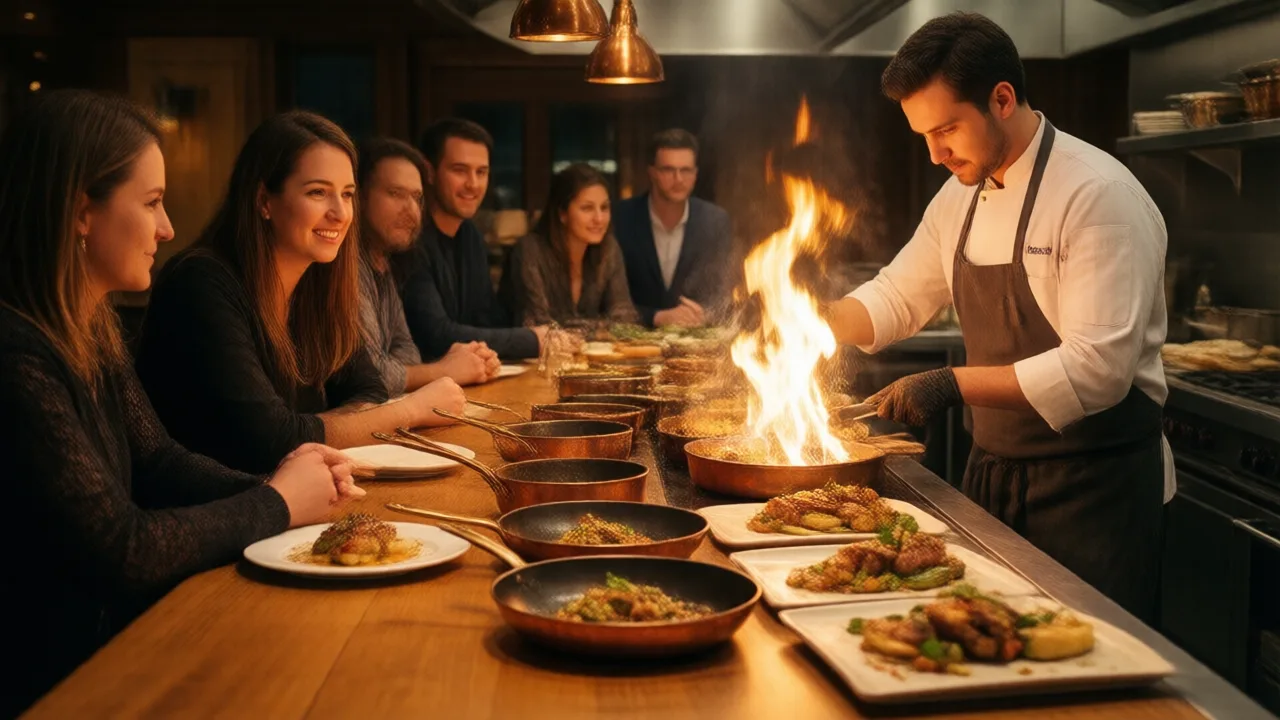
Walk into most restaurants with a chef's counter and look at the book on a Tuesday. The dining room is at 60%. The counter — the eight or twelve seats with the best sightlines in the building, the ones guests photograph, the ones that carry the highest margin per square foot on the floor — has two people at it.
That gap is not a demand problem. It is a merchandising problem. Premium seats fail for a boringly consistent set of reasons: they are listed in the booking widget as "Counter" with no description, they are priced as a location preference rather than as a product, they can be cancelled at 6:45 PM with no consequence, and nobody in the building is accountable for filling them. Meanwhile the same restaurant will spend $2,000 a month on ads to push covers into a dining room earning half as much per seat.
Here is what that costs. A twelve-seat counter at $165 per person, filled five nights a week, is $9,900 a week and roughly $515,000 a year from twelve chairs. Running it at 55% occupancy instead of 90% leaves about $200,000 on the floor annually — from inventory you already built, in a space you already pay rent on, staffed by cooks who are already on the clock.
What Makes a Premium Seat Premium
Before pricing anything, be precise about what you are actually selling. Guests do not pay a premium for proximity to a kitchen. They pay for four things, and if your offer is missing two of them the price will not hold:
- Access. Watching the cooking happen, hearing what is being made, seeing the pass from the inside. This is the irreducible core.
- Narration. Somebody explaining the dish, the producer, the technique. A silent counter is just a bar with a better view.
- Exclusivity. Limited seats, a booking process that signals scarcity, courses or preparations that do not exist on the dining room menu.
- Duration and pacing. A structured arc with a beginning and an end. Two and a half hours that feels designed, not a 70-minute turn with extra steps.
Miss the narration and you have an expensive bar seat. Miss the exclusivity and guests will ask why the counter costs more than table nine. The offer has to be materially different, not just better positioned.
Pricing the Seat
The rule of thumb that survives contact with reality: price a premium seat at two to three times your dining room average check, as a fixed per-person price rather than an a la carte spend.
| Dining room average check | Counter / chef's table price | Pairing supplement | Typical format |
|---|---|---|---|
| $38–48 | $85–115 | $40–55 | 5–6 courses, 90 min |
| $55–70 | $130–190 | $55–95 | 7–9 courses, 2–2.5 hrs |
| $85–110 | $225–340 | $110–185 | 10–14 courses, 3 hrs |
Fixed pricing is not a convenience, it is the whole economic case. When the menu is fixed you know your purchasing to the gram, waste falls close to zero, prep is standardised, and the labour per cover is predictable. Contribution margin on a well-run counter typically lands 8 to 14 percentage points above the main dining room, which means a $165 counter seat can contribute what two and a half dining room covers do.
Two supplements worth building in from day one. A beverage pairing is the highest-margin addition available and attaches at 45% to 65% of seats when it is presented as part of the booking flow rather than offered on the night. A small number of add-ons — a supplemental course, a caviar service, a rare pour — give guests a way to spend more without changing the format, and typically lift average spend by 12% to 18%.
Book It Like a Ticket, Not Like a Table
This is the single change that separates counters that run at 90% from counters that run at 55%. Premium seats should be sold as ticketed inventory: fixed price, paid at booking, non-refundable inside a stated window, transferable to another guest. It is the same posture that underpins serious fine dining reservation management, applied to a smaller pool of seats.
Why prepayment is non-negotiable here:
- The inventory is non-substitutable. A no-show at a twelve-seat counter is 8.3% of the night's premium revenue, and there is no walk-in who can fill a seat in a nine-course menu that started 40 minutes ago.
- The prep is committed early. Counter menus are built against the confirmed count. An unpaid cancellation at 4:00 PM wastes food that was portioned that morning.
- It improves the ending. When the transaction is complete before arrival, the evening finishes on the last course and a handshake, not on a folder and a card machine. Guests consistently rate this higher.
- It filters correctly. Guests willing to prepay $165 are guests who want the experience. Guests who bounce at the payment screen were never going to be happy with a three-hour tasting menu.
If full prepayment feels too aggressive for your market, a per-person deposit of $35 to $75 captures most of the benefit. What does not work is treating the counter like the dining room — an open booking, no card, cancel any time. That is how you end up staffed for twelve and cooking for seven. The mechanics of holds, deposits, forfeit windows, and refund handling are worth setting up properly once; a well-structured deposit and prepayment policy applies to private dining and large parties as well, so the work is reusable.
The Listing Copy That Sells the Seat
Most restaurants describe premium seats with a single word in a dropdown. That word is doing none of the work. Compare:
Twelve seats along the pass, close enough to hear the ticket called. Eight courses built around whatever came in that morning, plated in front of you and explained by the cook who made it. Two and a half hours, one seating a night, Thursday to Saturday. Wine pairing $75. Prepaid at booking.
The second version does five specific jobs the first cannot: it names the seat count so scarcity is legible, it states the format so nobody arrives expecting a burger, it prices it honestly so there is no surprise, it explains the duration so guests plan the evening around it, and it describes the experience in sensory rather than logistical language. Every one of those is a reason somebody clicks book instead of scrolling on.
Publish that copy in four places, and keep them identical: the booking widget, a dedicated page on your own site, your Google Business Profile, and your reservation confirmation. The most common leak is a beautiful description on the website and the word "Counter" in the actual booking flow, which means the guest most likely to buy never sees the pitch.
Release Schedule and Inventory Discipline
Open the booking window 30 to 60 days ahead, and release on a fixed, publicised schedule — the first of each month for the month after next works well. Predictability is the point: a known release date builds an audience that sets a reminder, which is worth far more than a rolling window nobody can plan around.
Hold back roughly 10% of seats for same-week release. That reserve absorbs regulars, visiting industry guests, press, and the guest who cancelled at 30 days and rebooked at 6. Without a reserve, every accommodation you make displaces a paid booking, and the host stand ends up making revenue decisions at 6:00 PM.
Three inventory rules worth writing down:
- One seating per night, or two with a hard gap. Counters that try to turn twice inside a normal service compress the experience and break the arc. If you run two, build in at least 45 minutes of reset.
- Never overbook premium seats. There is no recovery. A bumped guest holding a $165 prepaid receipt is a public complaint waiting to be written.
- Cap parties at four. Six or more at a counter turns into a private conversation with its back to the kitchen, which changes the atmosphere for everyone else seated there.
Example scenario: From 54% to 91% Occupancy on a 14-Seat Counter
Illustrative scenario — a composite example built to show how the numbers work. It does not describe a real business or customer.
A modern American restaurant in Austin ran a 14-seat kitchen counter at $145 per person, five nights a week, and could not get past 54% occupancy. The seats were listed in the booking widget as "Chef's Counter," bookable with no card, cancellable up to two hours before. Three changes over one quarter: they moved to full prepayment with a 72-hour cancellation window and free transfer to another guest, replaced the dropdown label with a 60-word description on the booking screen itself, and moved to a fixed release date on the 1st of each month announced to their guest list. Occupancy reached 91% within four months. Wine pairing attachment went from 31% to 58% once it was offered inside the booking flow rather than at the counter. Annualised, the changes were worth roughly $268,000 on the same fourteen chairs, with no increase in labour and a slight reduction in food cost from the tighter counts.
Staffing the Counter
The counter is the only station in the building where a cook is also the host, the storyteller, and the face of the meal. That is a genuinely different job, and pretending otherwise is why so many counters feel flat.
What the staffing math actually looks like at twelve to fourteen seats: one cook dedicated to counter plating and narration, sharing a support cook with the main line, plus one server managing beverage, pacing, and everything that would otherwise interrupt the chef. Above sixteen seats that model breaks — the cook can no longer narrate and plate at the same pace, and you are effectively running a second dining room.
Two things to build deliberately. First, rotate which cook hosts, but not nightly; guests book to see a specific person as often as they book to see a menu, so publish who is cooking when it is a draw. Second, brief the counter team on the guest list before service. Who is celebrating, who has been eleven times, who writes about restaurants, who cannot eat shellfish. The value of that briefing compounds only if the information persists between visits, which is a guest record problem rather than a memory problem — and the same discipline that powers VIP recognition in the dining room applies directly at the counter.
Filling Midweek Without Discounting
The instinct on a soft Tuesday is to drop the price. Resist it. A discounted premium seat teaches your audience to wait for the discount, and the damage takes a year to undo.
Change the product instead:
- Run a different format midweek. Five courses at $95 on Tuesday and Wednesday against nine courses at $165 Thursday to Saturday. Different product, different price, no discount signal.
- Give the night a reason. A producer dinner, a single-ingredient night, a visiting cook, a wine maker at the counter. People will move a Tuesday for a specific event; they will not move it for general availability.
- Offer midweek to your list first. Repeat guests get a 48-hour window on new midweek dates before they go public. It fills seats and it makes the list worth being on.
- Sell the counter for small buyouts. Twelve seats is exactly the size of a lot of corporate dinners and milestone birthdays. A counter buyout is easier to staff than a private room and often prices higher per head — the same revenue logic that makes private event work so profitable, applied to inventory you already have.
What to Track
Four metrics, reviewed monthly, kept separate from the dining room numbers:
- Seat occupancy by night. Not covers — occupancy against available premium seats. Anything under 75% on a weekend is a merchandising failure, not a demand failure.
- Revenue per seat per night. Base price plus pairings plus supplements. This is the number that tells you whether the format is priced correctly.
- Pairing and supplement attachment rate. Below 40% means the offer is being made too late — move it into the booking flow.
- Repeat rate at 12 months. A good counter converts 25% to 40% of guests into a second booking within a year. If yours does not, the experience is not differentiated enough to be worth repeating.
Premium seats reward attention in a way that ordinary covers do not. Twelve chairs, priced correctly, sold like tickets, described like an experience, and staffed by someone who wants to talk about the food, will out-earn a quarter of your dining room. The restaurants that struggle with them are almost never the ones with the wrong food. They are the ones treating the best seats in the building like an afterthought in a dropdown menu.
Sell Premium Seats Like Tickets, Not Tables
KwickBook handles ticketed seatings, prepayment, per-seat pricing, and guest preference records for chef's table and counter inventory inside KwickOS — so a $185 seat is booked with the same rigour as a theatre ticket and never treated like a walk-in two-top.
Explore Ticketed Seatings in KwickOS →